Bathroom Tiling in Perth
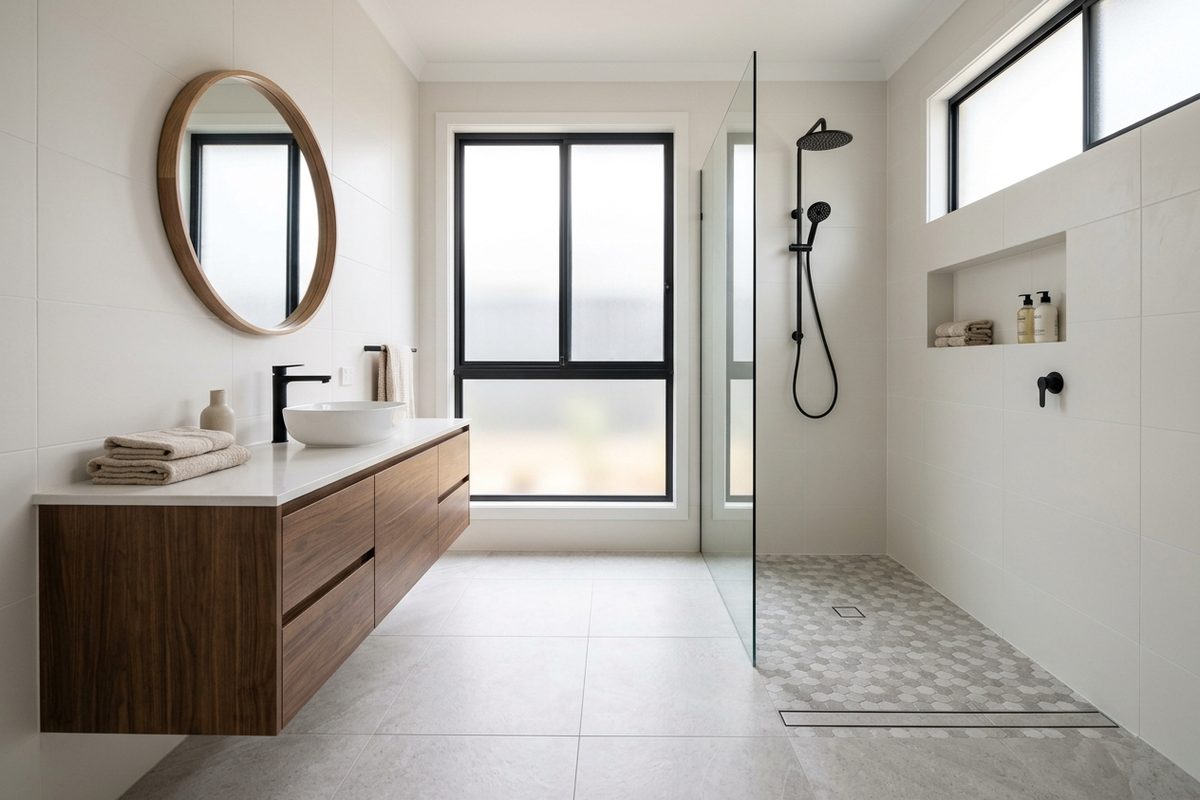
A bathroom is the hardest room in the house to tile. It is mostly edges, it has to be waterproof before a single tile goes down, and the parts that matter most are the parts you will never see again once the job is finished.
This page explains what a bathroom tiling job involves in Perth, what the waterproofing rules actually require, and what to ask before you accept a quote. When you are ready, tell us about the job and we will pass it to a Perth tiler who can quote it.
Get your bathroom tiling quoted
Waterproofing: what has to happen before the tiles go down
This section sits first because it is the part of the job you cannot inspect later and the part that costs the most to get wrong.
Waterproofing in a domestic wet area is covered by AS 3740:2021, the current edition, which supersedes the 2010 version. Tile installation itself is covered by AS 3958:2023, incorporating Amendment No. 1 (2024). The National Construction Code sets the requirements that apply to the work.
AS 3740:2021 Waterproofing of domestic wet areas; AS 3958:2023 Installation of ceramic and stone tiles, reissued incorporating Amendment No. 1 (June 2024). Standards Australia.
What the requirements actually say
These are the numbers a homeowner can check, and they are the reason a bathroom costs more per square metre than a hallway.
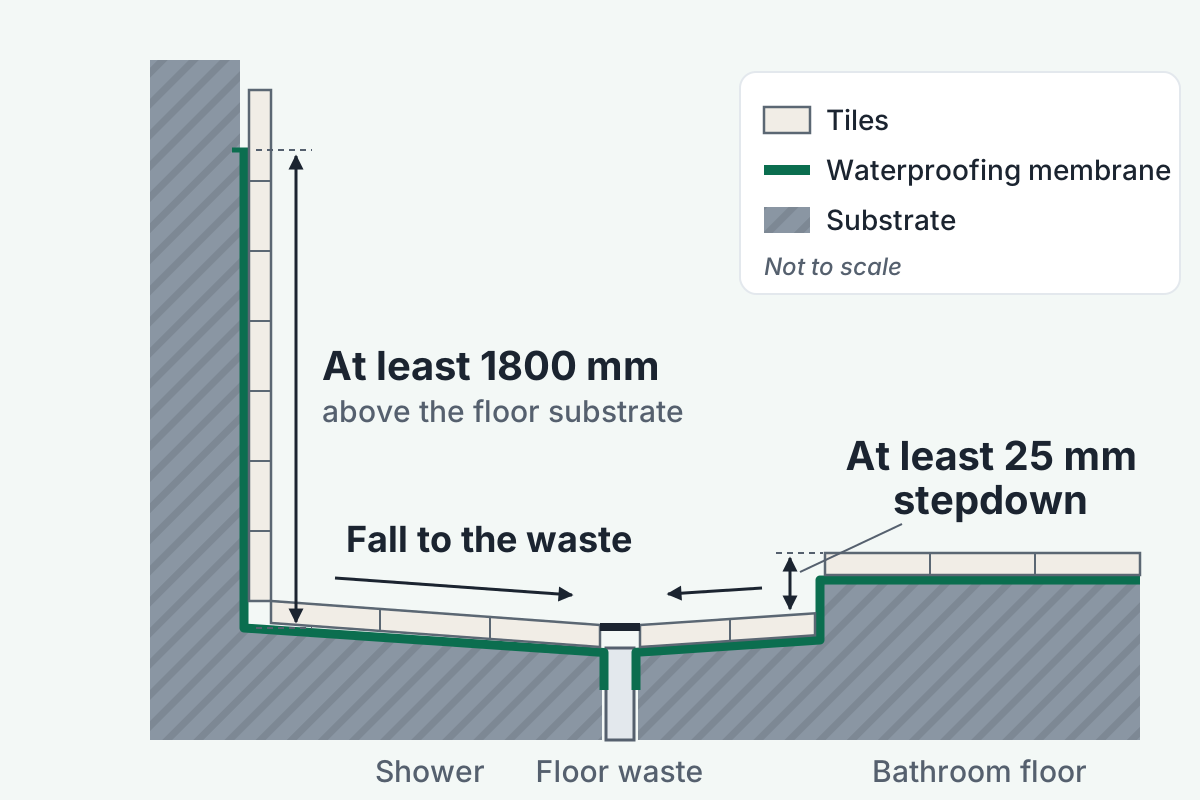
- Shower walls must be waterproofed to not less than 1800 mm above the floor substrate.
- The floor must fall to the waste, continuously, at not less than 1:80 and not more than 1:50. Too flat and it holds water. Too steep and it is uncomfortable to stand on.
- Wall junctions and joints inside the shower must be waterproof, as must wall to floor junctions and any penetrations.
- Outside the shower, where a flashing is used at the wall to floor junction, the horizontal leg must be not less than 40 mm.
- Perimeter flashing at wall to floor junctions must have a vertical leg extending at least 25 mm above the finished floor level, and a horizontal leg at least 50 mm wide.
- The stepdown at the shower must be at least 25 mm below the finished floor level outside it.
- In an unenclosed shower, the waterstop sits at least 1500 mm horizontally from the shower rose.
- Hobs must not be built from timber, and where there is a hob the membrane carries over it and terminates not less than 50 mm onto the floor.
- Bond breakers are required at wall to wall, wall to floor and hob to wall junctions, and at movement joints where the membrane is bonded to the substrate.
- The membrane itself must comply with AS/NZS 4858.
The line most people do not know
Whether your bathroom needs a building permit depends on the scope of the work, not what it costs. Schedule 4 of the Building Regulations 2012 lists the work that is exempt.
But under section 37(2) of the Building Act 2011, where building work is done without a building permit, the owner must ensure the finished work complies with every building standard that applies to it. A small job is not an exempt job. Nobody signs off a compliant bathroom because it was cheap.
Building Act 2011 (WA), section 37; Building Regulations 2012 (WA), Schedule 4.
What to ask about waterproofing
- Which membrane product is being used, and is it compliant with AS/NZS 4858
- Where the membrane goes, specifically how far up the shower walls and how it is treated at the junctions
- What the fall to the waste will be, and how it is being set
- Who is doing the waterproofing, if it is not the tiler
- How long it cures before tiling starts, and whether the schedule allows for it
If the answer to any of these is vague, that is the moment to ask for it in writing, not after the tiles are on.
What a bathroom tiling job involves
In rough order, and the order matters because most of the delays come from doing these out of sequence.
- Removal. Old tiles come up, along with whatever is under them. Nobody knows the condition of the substrate until this is done.
- Substrate preparation. Making the surface flat, sound and dry enough to take a membrane. This is where unexpected work shows up.
- Waterproofing. The membrane goes on, then it cures. It cannot be rushed and it cannot be tiled over early.
- Setting out. Where the full tiles land and where the cuts fall. On a small floor this decides how the finished room looks.
- Tiling. Floor and walls, then the detail work around the waste, the niche, the vanity and the door.
- Grout and silicone. Grout in the field, flexible sealant at the junctions and corners where movement happens.
If your job also involves moving the shower, the vanity or the floor waste, that is plumbing work before it is tiling work, and in Western Australia plumbing work has to be done by a licensed plumber. A handful of basic tasks at your own home are exempt, such as replacing a shower head or clearing a blocked fixture or waste pipe with a plunger.
Building and Energy, Plumbing work in your home.
Moving plumbing is also the single largest thing you can do to a bathroom budget. That is covered alongside what it costs to tile a bathroom in the cost guide.
Choosing tiles for a wet area
Three things matter more than the look.
Slip resistance. Ask for the floor tile's slip resistance rating, and whether it suits a wet shower floor rather than a dry one.
Format. Large format tiles need a flatter substrate and are less forgiving of a floor that falls to a waste. Mosaics sit into a fall more easily, which is why shower floors often use them, but they are far slower to lay and there is much more grout to maintain.
Material. Porcelain is denser and harder to cut than ceramic. Natural stone usually needs sealing and is less tolerant of the chemicals people clean bathrooms with.
Regrouting: when the tiles are fine and the grout is not
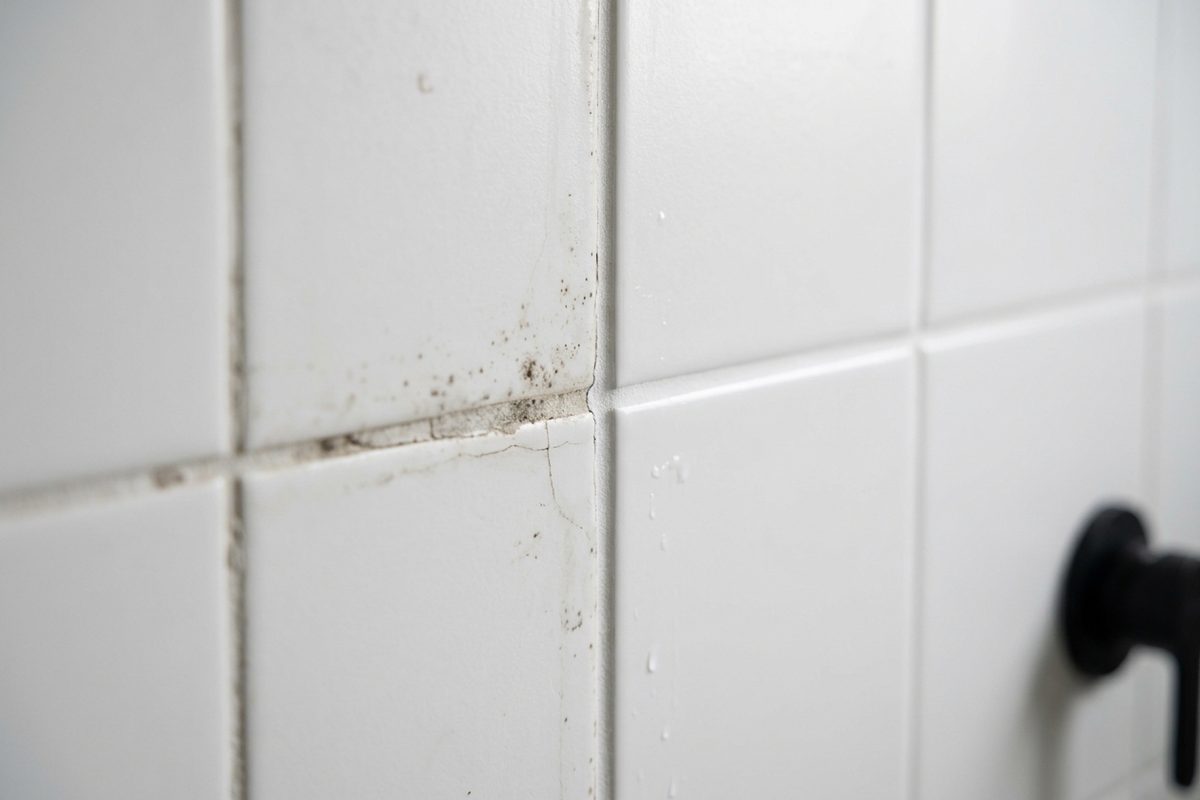
Regrouting removes the old grout from the joints and replaces it. It is a legitimate option when the tiles themselves are sound and well stuck down, and the grout has stained, cracked or fallen out.
It is not a repair for a wet area problem. If water is getting past the grout and into the wall or the floor, the grout is a symptom. Grout is not a waterproofing layer. The membrane behind the tiles is, and no amount of new grout will fix a membrane that has failed.
Signs the job may be more than regrouting: tiles that sound hollow when tapped, tiles that move, swelling at the base of a wall, or a smell that does not go away.
If a shower is leaking, that needs a specialist assessment before anyone quotes a repair.
Costs for regrouting and where they vary are on the bathroom tiling and regrouting costs page. Tiles that are cracked, loose or drummy are a different job, covered under cracked or drummy tiles.
Which job do you actually need
Most people reach regrouting having already tried something that did not work. These are the cases:
- The grout is discoloured but intact. This is a cleaning job, not a regrouting job. Cement grout is porous and picks up soap residue and mineral deposits, and replacing sound grout to fix a stain is spending replacement money on a cleaning problem.
- The grout is cracked, crumbling or missing in places. This is regrouting, and the rest of this section is about it.
- The grout is fine but the corners have cracked. Very common, and usually a sign the corners were grouted when they should have been siliconed. See below.
- Damp is showing outside the bathroom. Stop. Regrouting will not fix it, and doing it first wastes money and time. See the signs of a failed shower below.
Why grout fails
- Normal wear. Cement grout is a wear surface and it erodes, particularly on shower floors.
- Movement. Buildings move. Tiles are rigid, so the movement concentrates in the grout joints and hairline cracks follow.
- The wrong grout for the joint. Grout is made for particular joint widths, and the wrong one shrinks and cracks.
- Acidic cleaners. Cement is attacked by acid, so an acidic bathroom cleaner used regularly over years can etch the grout it is meant to be looking after. Check the grout manufacturer's cleaning advice, and if in doubt use a neutral cleaner.
- Poor original installation. Joints not filled to full depth, or grouting done before the adhesive had cured. Failures from this show up early, and usually across the whole surface rather than in patches.
Partial or full regrout
A partial regrout makes sense when the failure is confined to one area, such as a shower floor while the walls are sound. The catch is colour: new grout will not match aged grout, even from the same product and colour code, so a patched section stays visible. Anyone quoting a partial regrout should tell you that before they start.
A full regrout gives a uniform result, and it is the only sensible option when the failure is widespread or when you are changing the grout colour.
Cement or epoxy
Cement based grout is the standard. It is cheaper, easier to work with, comes in a wide colour range and is straightforward to repair later. It is porous, so it stains, and it needs sealing to resist that.
Epoxy grout is non porous, so it resists staining and chemical attack without sealing and holds its colour far better over time. It costs more in both material and labour, because it has a short working time and has to be cleaned off the tile face before it sets. Done badly it leaves a haze on the tiles that is hard to remove. It is worth considering on a shower floor or a splashback, and whether it is worth it across a whole floor is a budget decision.
Sealing is not regrouting
The two get quoted in the same conversation and they do different things. Sealing is a penetrating sealer applied to sound cement grout so that it absorbs less water, soap and staining. It is maintenance rather than repair, and it wears, so it is repeated from time to time.
Regrouting replaces the grout itself, and it is what you do when the grout has physically failed. Sealing failing grout does not stop the failure, it just makes it look wetter for a while. Epoxy needs neither, because it is non porous. A colour coating sold to restore grout colour is cosmetic: it works on grout that is sound but stained and does nothing for grout that is cracking or letting water through.
What a proper regrout involves
Worth knowing, because the shortcut version is common and it fails within a year or two.
- Removal. The old grout is raked out mechanically, to a depth that gives the new grout something to hold on to. Skimming new grout over the top of the old is the common shortcut, and it fails because the layer is too thin to bond or last.
- Cleaning out. The joints are vacuumed so the new grout bonds to the tile edges and not to dust.
- Grouting. New grout is worked into the joints to full depth, then cleaned off the tile face before it sets.
- Curing. The grout cures before the surface is wetted or sealed. The manufacturer's data sheet gives the times for the product being used, and they get longer in cooler weather.
- Sealing. Cement grout benefits from it. Epoxy does not need it.
Ask how the old grout is being removed. If the answer is that it is not, the new grout is going over the top of it.
Corners should be silicone, not grout
Internal corners, and the junction where the wall meets the floor, are movement joints, and they need a flexible sealant, not a rigid one. Grout in those junctions cracks, and the cracking keeps coming back however many times it is regrouted.
If your grout is failing only in the corners while the flat joints are sound, this is almost certainly why, and the fix is to cut it out and silicone it rather than regrout the whole surface. That is a much smaller job, and worth knowing before you accept a quote for the larger one.
Signs your shower waterproofing has failed
The usual signs are damp turning up outside the shower: on the other side of the shower wall, at the base of a nearby wall, in a skirting board or door frame that has swollen, or on the ceiling below. Inside the shower, tiles that sound hollow or move, grout that keeps cracking in the same place, and mould that keeps returning at the base of the walls can all point the same way.
None of these proves the membrane has failed on its own. A poorly fitted floor waste, a failed seal around the screen, a leaking pipe in the wall or poor ventilation can leave similar marks. That is why a leaking shower needs diagnosing before anyone prices a fix.
What to look for:
- Damp, staining or flaking paint on the other side of the shower wall
- Swollen skirting boards, architraves or door frames near the bathroom
- Tiles that sound hollow or move underfoot, especially near the waste and the hob or stepdown
- Grout or silicone that cracks again soon after it has been replaced
- Mould that keeps coming back at the base of the shower walls, or a musty smell that will not clear
- Water marks on the ceiling below a first floor bathroom
Why covering it up does not work. If the membrane has failed, new grout, new silicone or a new layer of tiles will hide the problem for a while without stopping the water. Fixing it means taking the shower back to the substrate, rebuilding the falls and the membrane to the requirements set out above, and retiling.
If it turns out to be a pipe. A leak from the pipework in the wall is plumbing work before it is tiling work, and in Western Australia that has to be done by a licensed plumber.
Older Perth showers. A shower built decades ago may have been built to older requirements, or without a membrane at all. In homes built before 1990, the sheeting behind the wall tiles can contain asbestos, as covered under Older Perth bathrooms below, so it gets tested before anything is cut out.
If you are seeing any of this, tell us what you have noticed and we will pass it to a Perth tiler. Expect them to want to see the shower before giving a price.
Older Perth bathrooms
In homes built before 1990, the sheeting behind wall tiles, bathroom wall panels and old vinyl floor tiles can contain asbestos. WorkSafe WA treats removing any quantity of friable asbestos, or more than 10 square metres of non-friable asbestos, as licensed asbestos removal work, and WorkSafe has to be notified at least five days before that work starts.
HealthyWA, Asbestos in and around the home; WorkSafe WA, Asbestos removal notifications.
If anything is suspected, the work stops and it gets tested before anything is cut, drilled or sanded. This is not a step to negotiate around, and no reputable tiler will.
Older bathrooms also tend to produce more surprises at the removal stage: previous repairs, movement, a substrate that will not take a new floor, or a membrane that was never there in the first place.
What to ask before you accept a quote
- What is included, line by line: removal, disposal, preparation, waterproofing, tiling, grout and sealant, making good
- What is excluded, particularly tile supply, plumbing, electrical and asbestos testing
- What happens if the substrate is worse than expected, and how variations get approved
- Who is buying the tiles, who counts them, and who wears the wastage
- How long the bathroom will be out of use, including membrane curing time
- What documentation you will get for the waterproofing
Give every tiler the same brief. If one prices a full retile and another prices tiling over the existing floor, the difference between the two quotes tells you nothing useful. When tiling over is and is not an option is covered on our floor tiling page.
Common questions
Can you tile over existing bathroom tiles?
Not as a fix for anything wet. A new layer of tiles does nothing for the membrane underneath, and if that membrane has failed it hides the evidence. On the floor it also raises the level, which eats into the stepdown at the shower. On dry walls away from the shower, tiling over sound, well bonded tiles is sometimes possible, but every existing tile has to be checked first.
Can a shower be retiled without redoing the whole bathroom?
It can be. The shower can be stripped back, rewaterproofed and retiled on its own, provided the new membrane can be joined properly at the edge of the shower and you can live with how the new tiles meet the old. Whether that works in your bathroom depends on how it was built, which is a question for the tiler on site.
Can I use different tiles in the shower and on the rest of the floor?
Yes. Shower floors often use a smaller tile or a mosaic because it sits into the fall to the waste more easily, while the rest of the floor takes a larger format. Ask about slip resistance for the shower floor specifically, and how the change of tile will be finished where the two meet.
Can you regrout over existing grout?
Not properly. Skimming new grout over the old is a common shortcut and it fails, because the new layer is too thin to bond or last. The old grout comes out first. Products exist to refresh grout that is sound but stained without a full rake out, but they are cosmetic and no use on grout that is cracking or letting water through.
Why does my grout keep cracking in the same corner?
Because the corner is a movement joint and grout is rigid. Internal corners and the wall to floor junction need a flexible sealant, not grout, and the cracking will keep returning however often it is regrouted. Cutting it out and siliconing it is a much smaller job than regrouting the whole surface.
Can I change the colour of my grout?
Yes, but it means a full regrout rather than a patch, because new grout will not match old. A colour coating can sometimes restore sound but stained grout, which is cosmetic only and does nothing for grout that is failing.
Does new grout need sealing?
Cement based grout benefits from sealing once it has cured, and the sealing is repeated from time to time. Epoxy grout is non porous and does not need it.
Get your bathroom tiling quoted
Tell us about the room, roughly the area and what you want done. We will pass it to a Perth tiler who can quote it. We do not do the tiling ourselves, and the tiler who quotes you sets their own price.
No spam and no obligation. Your details go to a local tiler so they can quote your job - the contractor pays for the enquiry, you do not. We never sell your details or add you to a marketing list. How we handle your information.
Ready to get started?
Call (08) 9516 1688 or send an enquiry online.
Get your bathroom tiling quotedCall (08) 9516 1688